IQ 10: Answering Alcuin, Dancing with Stars, & Fellow Book Projects
Inklings Quarterly
February 19, 2026
From Our Fellows
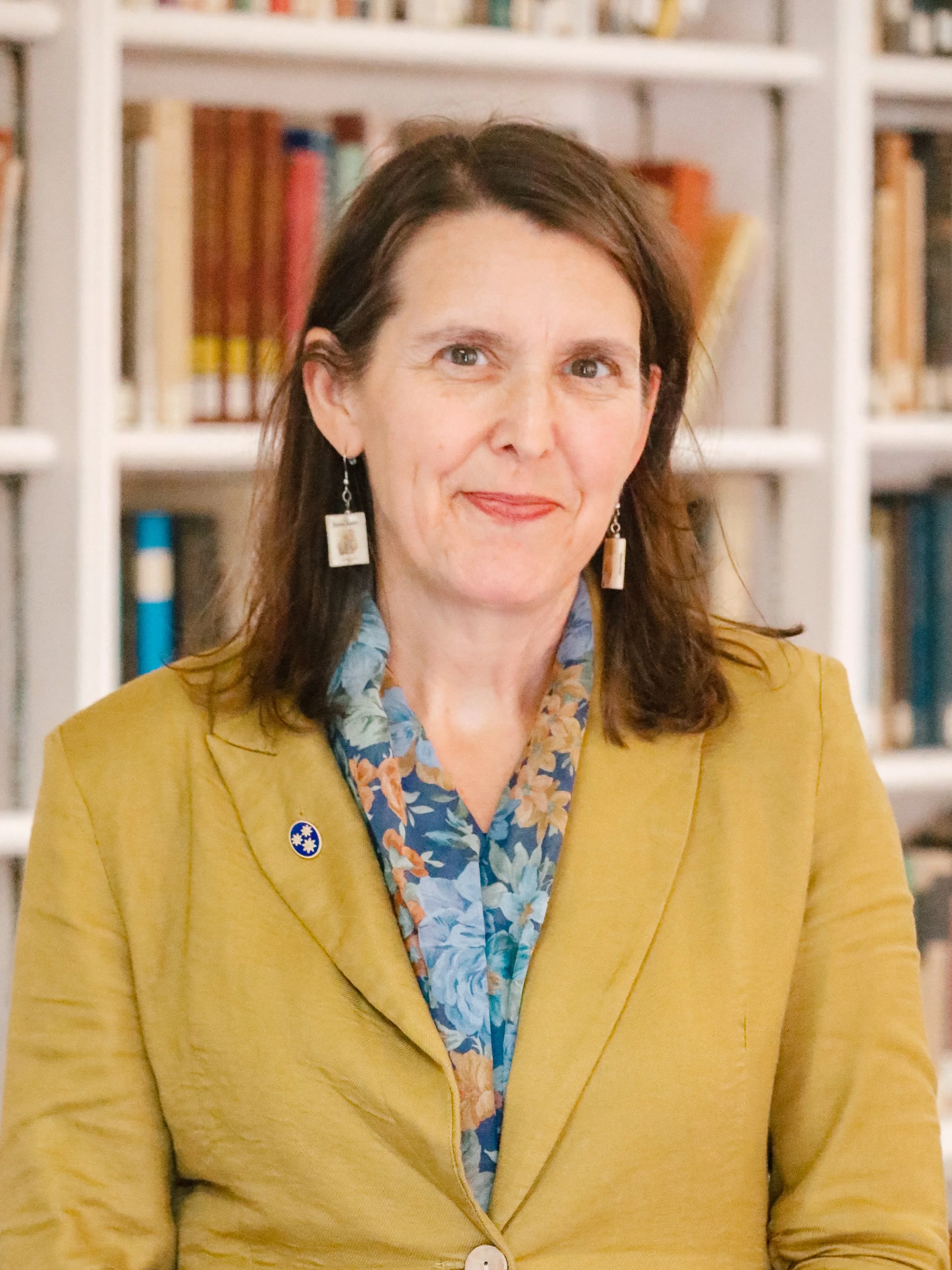
Love Song to a Hidden God: Lewis, Tolkien, Undset, and Northern Literature
Dr. Amy Fahey | AY25-26 Fellow
Teaching Fellow, Thomas More College of Liberal Arts
“Quid enim Hinieldus cum Christo?” Alcuin poses this question to the bishop of Lindisfarne after receiving distressing news that the monks want to hear pagan stories, accompanied by the harp, during mealtimes. “Let the words of God be read at dinner,” Alcuin writes, “the discourse of the fathers, not the song of the heathens. What has Ingeld to do with Christ? Your house is narrow and cannot contain both.”
Given the monastic context, Alcuin’s words strike us as sound and defensible. And yet, as if in direct response to this holy Anglo-Latin teacher of Charlemagne, a handful of twentieth-century Christian writers—Sigrid Undset, J.R.R. Tolkien, and C. S. Lewis among them—cast the choice between Norse pagan and Christian narratives not as a narrow “either/or,” but an enthusiastic (if qualified) “both/and.” As Tolkien declares in On Fairy Stories: “The Evangelium has not abrogated legends; it has hallowed them.”
Alcuin’s question and Tolkien’s answer have accompanied me for nearly two decades now, as I’ve gone deeper into reading and teaching the spare and shocking eddas and sagas alongside the works of Tolkien, Lewis, and Undset, all three of whom were enthralled by these stories at a young age.
When Tolkien was sixteen, the Viking Club of London published the Poetic or “Elder” Edda in Olive Bray’s facing-page translation with W. G. Collingwood’s stunning pen and ink illustrations. It’s not difficult to imagine the young scholar of languages and lore lingering over the pronunciation, orthography, and etymology of those enchanting names from Midgarth: Bifurr, Bömburr, Fili, Kili, Gandalfr, Eikinskjaldi (“Oaken-shield”). When, at the age of ten, Undset was given a copy of Njal’s Saga by her uncle, she was similarly transfixed. “She would wake up in the morning, dress and sit and breakfast, sick with impatience to lay her hands on the book again and get outside to a place where she could continue her reading,” an early biographer, A. H. Winsnes, tells us.
Just so did C. S. Lewis, as a little boy of seven, first encounter Longfellow’s poetic account of the death of Baldr, the purest and loveliest of the Norse gods:
Baldur the beautiful is dead, is dead.
And through the misty air
Passed the mournful cry
Of sunward sailing cranes.
“I knew nothing about Balder,” Lewis later confessed, “but instantly I was uplifted into huge regions of northern sky. I desired with almost sickening intensity something never to be described (except that it is cold, spacious, severe, pale and remote) and then . . . found myself at the very same moment already falling out of that desire and wishing I were back in it.”
How are we to account for the intense early appeal—and later the marked influence—of these works of pagan northern literature on the greatest Christian writers of the twentieth century? Just what did Tolkien admire in the lives and stories of those whom he readily acknowledged to be “goðlauss” (godless), as he calls them in his essay on the Elder Edda? And what could Sigrid Undset have found so compelling in characters—like the reckless Skarphedin of Njal’s Saga—whose lives and worldview are aptly summarized by Tom Shippey in Laughing I Shall Die as “disturbing . . . a kind of death cult”?
If Lewis is more subtle about, and perhaps a bit wary of, recasting the pagan literature that so transported him in his youth in his own mature Christian fiction, this may be because he for a time embraced a form of neo-paganism that rejected the Christian God. We see this neo-paganism at work, for instance, in an early attempt at an epic poem, “Loki Bound,” composed when he was fourteen. But the reworking is there, if we have the patience to trace it. For instance, though we never learn the mysterious past or regrets of Grace Ironwood in That Hideous Strength, a clue may be found in Lewis’ charactonym: in the Völuspá, Járnviðr, or Ironwood, is the place where Angrboða (“she who bodes sorrow”) begets the Fenris wolf. In Lewis’ iteration, however, Ironwood, whatever her troubled past, becomes a locus of Grace, a force for good rather than disaster.
Lewis, Tolkien, and Undset all came to realize that the neo-paganism of their own day bore little in common with its pre-Christian northern predecessor. “The modern heathenism is a new thing,” said Undset, “a declaration of war against a God who has spoken, where the old Heathenism was a love song to a God who hid himself.” As Chesterton reminds us, “Neo-Pagans have sometimes forgotten, when they set out to do everything the old pagans did, that the final thing the old pagans did was to get christened.”
Perhaps it is helpful, then, to reframe Alcuin’s question: What has Christ to do with Ingeld? In other words, how does the fact of the Incarnation both inform and transform our understanding of these pagan stories? The Evangelium—the story of the One whom the newly-Christian north called “the White Christ”—is not simply the love song of the pagans sung in a higher key. “Behold, I make all things new.” Because God is no longer hidden, we as readers can see the eddas and sagas anew for what they are: a plaintive hymn to an unknown God, offered in desperation for a way out of a hopeless situation. As Undset recognized, both saga characters and Norse gods, for all their heroism and nobility, are trapped in a cycle of tragic inevitability, a Ragnarök that will repeatedly play itself out (like the fighting warriors of Valhalla) until finally exhausting itself in spectacularly violent extinction—unless Someone comes to save man from himself. “There are two wolves, and the one who is chasing [the sun] is called Skoll. He frightens her, and he eventually will catch her.” (The Prose Edda)
In such great works as the Narnia series, The Space Trilogy, The Lord of the Rings, and Kristin Lavransdatter, then, Lewis, Tolkien, and Undset set the Eucatastrophe of Christ’s Incarnation and sacrificial redemption over against the catastrophe of man’s godlessness, offering readers a vision of hope and mercy to counter the despair and unbelief that threaten to engulf our own age. Tolkien’s exquisite reworking of the Völuspá (“The Prophecy of the Seeress”) thus ends not with the dragon plunging “for ever, o’er the doomed and the dead,” but with the return of Baldur:
Unsown shall fields of wheat grow white
When Baldur cometh after night;
The ruined halls of Odin’s host,
The windy towers on heaven’s coast,
Shall golden be rebuilt again,
All ills be healed in Baldur’s reign.

Dancing with the Stars: C. S. Lewis and Science Fiction Medievalisms
Dr. Shannon Valenzuela | AY25-26 Fellow
Affiliate Assistant Professor of Classical Education, University of Dallas
“[O]n the imaginative and emotional level it makes a great difference whether, with the medievals, we project upon the universe our strivings and desires, or with the moderns, our police-system and our traffic regulations.” (The Discarded Image, 94)
C. S. Lewis’s great admiration for the Medieval Model of the cosmos – complete with its geocentrism and failing to account for a few planets – had nothing to do with its scientific accuracy as a model, and everything to do with how we feel when we inhabit it. As he says in The Discarded Image, the “facts” about the Medieval cosmos “become valuable only in so far as they enable us to enter more fully into the consciousness of our ancestors by realizing how such a universe must have affected those who believed in it” (98, emphasis mine).
In this, as in so much else, I find Lewis to be a kindred spirit. Like Lewis, I am a medievalist; like him, I write science fiction. I’m in the midst of investigating the many ways modern speculative fiction dresses up in medieval garb–and why it does so–for the book I’m writing on science fiction medievalisms.
When you hear “science fiction medievalisms,” you might immediately think of stormtroopers in armor, galactic empires clashing over scarce resources, or quests across the stars in search of undiscovered worlds. From the chivalric code of the Jedi Knights to the monastic repositories of Foundation and A Canticle for Leibowitz, science fiction consistently returns to medieval tropes to construct its futures. Storytellers and worldbuilders often rely on these tropes as a kind of narrative shorthand to signal codes of honor, systems of power, and the human drive for exploration, expansion, and preservation.
But in The Harmonics of Time and Space: Medieval Story Structures in Science Fiction Worlds, I argue that medieval narratives offer far more to speculative storytellers than castles among the stars. The Medieval Model of the cosmos is sacramental, symbolic, deeply ordered, and profoundly relational. In this project, I am working intentionally in a Lewisian mode of empathetic medievalism — one that foregrounds the affective experience and treats medieval tropes not merely as motifs, but as immersive experiences through which we are invited to navigate and emotionally engage with narrative worlds.
For C. S. Lewis, this immersive experience was never merely aesthetic. It was formative. Lewis believed that inhabiting story worlds shapes the heart, training us to meet the dangers, sorrows, and joys of this life with courage, hope, and love. The primary aim of my current Project course, “C. S. Lewis and the Formation of the Heart,” is to invite students to enter imaginatively into the worlds of Narnia and the Ransom trilogy and to explore this formative dimension of Lewis’s work.
This formative immersion was Lewis’s great desire, both as a teacher and as a writer. He did not treat the Medieval Model as shorthand, or as merely a “pretty architecture” on which one might hang the decorative baubles of characters and events, like ornaments on a Christmas tree. There are moral and emotional consequences, not to mention spiritual ones, to inhabiting the Medieval Model of the cosmos…just as there are consequences to inhabiting our modern one. And the only way to grasp the full weight of those consequences is through immersion.
To give just one brief example, in The Discarded Image, Lewis describes the Medieval Model of the Cosmos as alive with light and life and music (112). The heavens dance in a “revelry of insatiable love” (119).
I can think of few visions further removed from this than the opening description of space in James Cameron’s screenplay for the 1986 film Aliens: “Silent and cold. The stars shine like the love of God…cold and remote.”
In the Medieval Model of the Cosmos, we are surrounded by light and love and music. We can choose to close ourselves off from this–as so many of the characters in Lewis’s fictional worlds do–but our choice does not alter the fabric of reality. The music continues even if we close our ears. When Tirian and his friends make their final stand in The Last Battle, they know that they do not stand alone, and that in victory or defeat, “we are all between the paws of the true Aslan.”
But in the world of Aliens, God is nowhere to be found. His love is cold. Space is empty and silent and frozen, and no one can hear you scream. This is the hellscape of the lowest pits of Dante’s Inferno. In such a cosmos, the only thing standing between you and annihilation is your own will to survive.
Truly, it matters very much which version of the cosmos you inhabit.
Fellow Spotlights
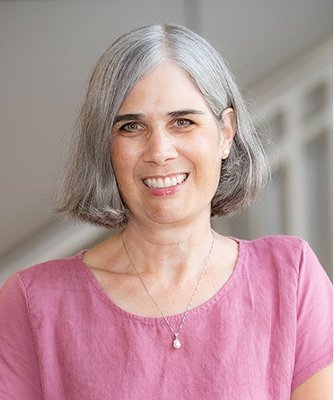
📚 Book Project
Dr. Leslie Baynes | AY23-24 Fellow
Associate Professor of Religious Studies, Missouri State University
Between Interpretation and Imagination: C. S. Lewis and the Bible
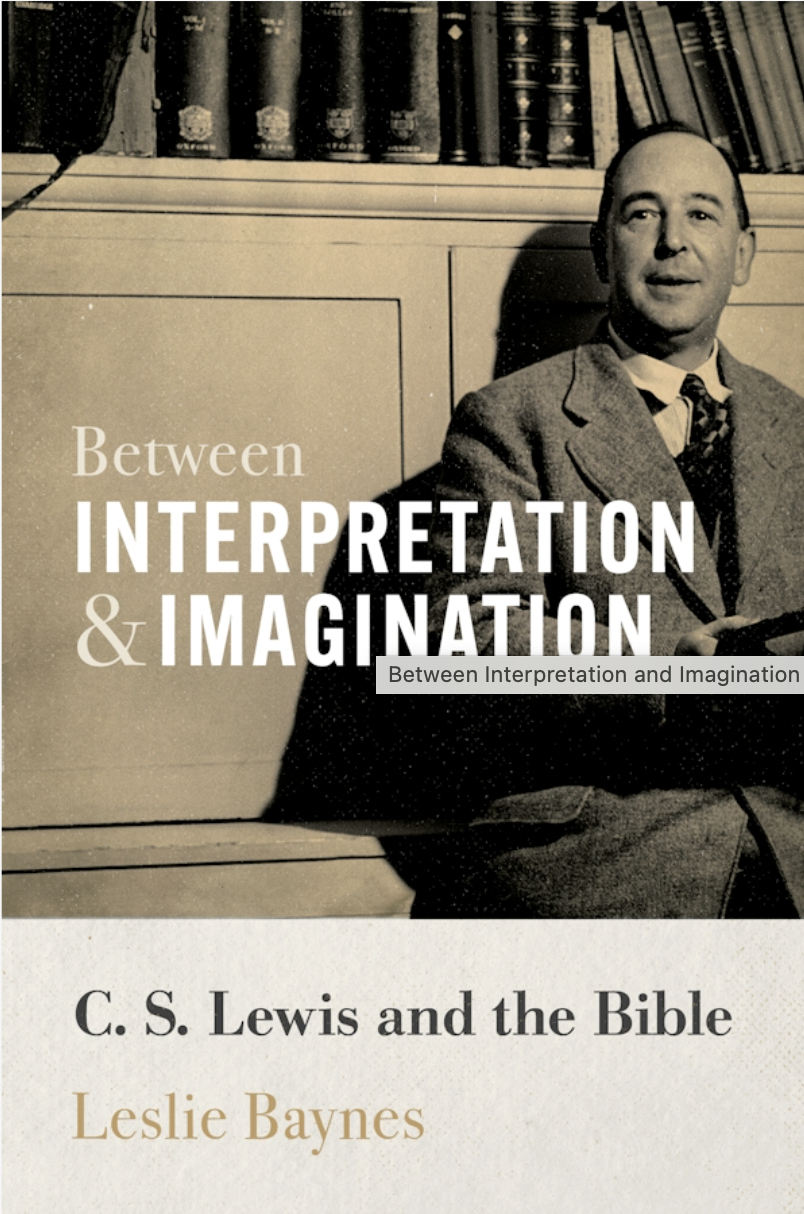
Leslie Baynes published Between Interpretation and Imagination: C. S. Lewis and the Bible with Eerdmans at the end of 2025. Michael Ward called it "a first-rate study that, by turns, chides, challenges, and champions Lewis’s various approaches to and engagements with the Bible. Scholarly and spirited, this is easily the best book yet written on Lewis and Scripture,” and Christianity Today's Russell Moore highlighted it as one of his top ten books of 2025. Dr. Baynes has been interviewed on dozens of podcasts and other channels, including the Catholic Biblical Association's Unbound Book Review, The Inklings Variety Hour, and Pints with Jack.
To read more about Dr. Baynes’s book or to purchase a copy, visit https://www.eerdmans.com/9781467469708/between-interpretation-and-imagination/.

📚 Book Project
Dr. Carla Arnell | AY23-24 Fellow
Professor of English, Lake Forest College
Divine Representation: The Rise of the Mystical Novel in Twentieth-Century England

Carla Arnell’s new book, Divine Representations: The Rise of the Mystical Novel, came out this month. Arnell’s book on the Edwardian mystical revival begins with a chapter on George MacDonald, whose shaping influence on the Inklings was so significant, and ends with an assessment of how this Edwardian mystical revival was carried forward in the metaphysical fictions of Charles Williams.
To read more about the book or to purchase a copy, visit https://sunypress.edu/Books/D/Divine-Representations
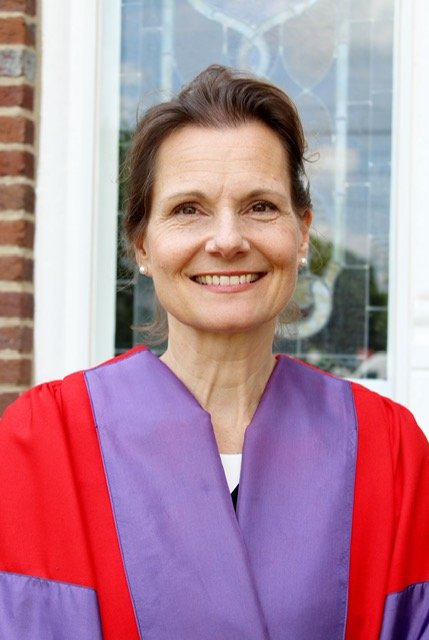
📚 Book Project
Dr. Carolyn Weber | AY24-25 Fellow
Fellow, Trivium and Humanities, New College Franklin
Introducing David Jack’s Scots translation of The Elect Lady, and Heather and Snow by G. K. Chesterton
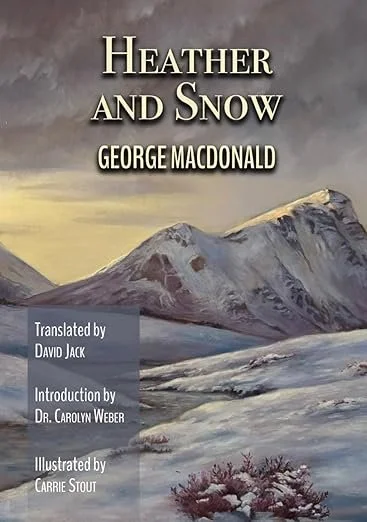
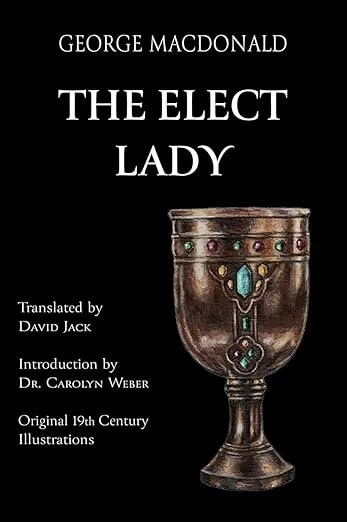
Carolyn Weber recently wrote the introductions for David Jack’s Scots translation of George McDonald’s The Elect Lady, and Heather and Snow. Both editions are now available! From Dr. Weber’s introductions:
"As we open up MacDonald’s Heather and Snow, it reveals itself to be a book about opening ourselves up. Rather than being merely a love story, it is a story about love. Or more precisely, about how to love, which is far more difficult to enact than it is to preach about.”
“The Elect Lady [is] a surprisingly slender novel that packs quite a punch. MacDonald lifts the veil on each character's very human struggles and flaws; he considers the small ways we justify our idols to ourselves. Serendipitous golden nuggets pop up everywhere, and on every topic, without warning and without artifice. He makes us look at our ordinary world twice: what it is, and what it will be.”

Dr. Dominic A. Aquila | AY24-25 Fellow
Professor of History, The University of St. Thomas (Houston, Texas)
Visiting Research Scholar at Blackfriars Hall, project on Fr. Martin D’Arcy, SJ, and Fr. Bede Jarrett
Dominic Aquila recently accepted an invitation to serve as a Visiting Research Scholar at Blackfriars Hall, Oxford, during Trinity Term 2026. During this time, he will be working on a dual biography of Fr. Martin D’Arcy, SJ, and Fr. Bede Jarrett, OP, exploring their contributions to the twentieth-century Catholic intellectual revival. The project considers D’Arcy’s relationship to the wider Catholic milieu surrounding the Inklings — not as a member of the group itself, but as an important interlocutor whose work helped sustain conversation between Oxford’s Catholic thinkers and the broader literary and theological culture of the period. Dr. Aquila is deeply grateful for the invitation and looks forward to continuing these shared scholarly and spiritual conversations with friends in the Inklings Project.

Dr. David Vosburg | AY24-25 Fellow
Professor of Chemistry, Harvey Mudd College
Tolkien Art and a Visit from a Harvey Mudd College Alumnus
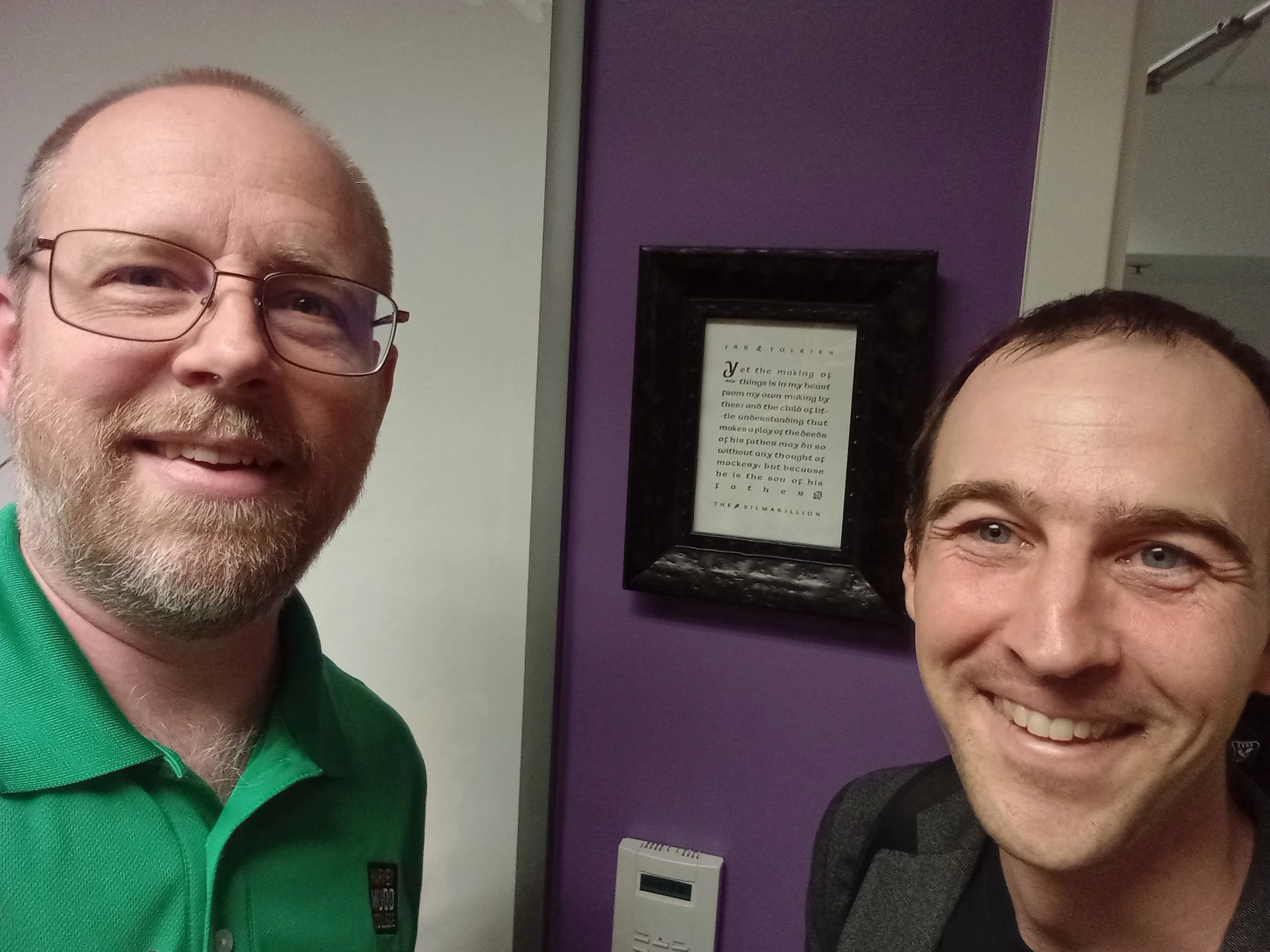
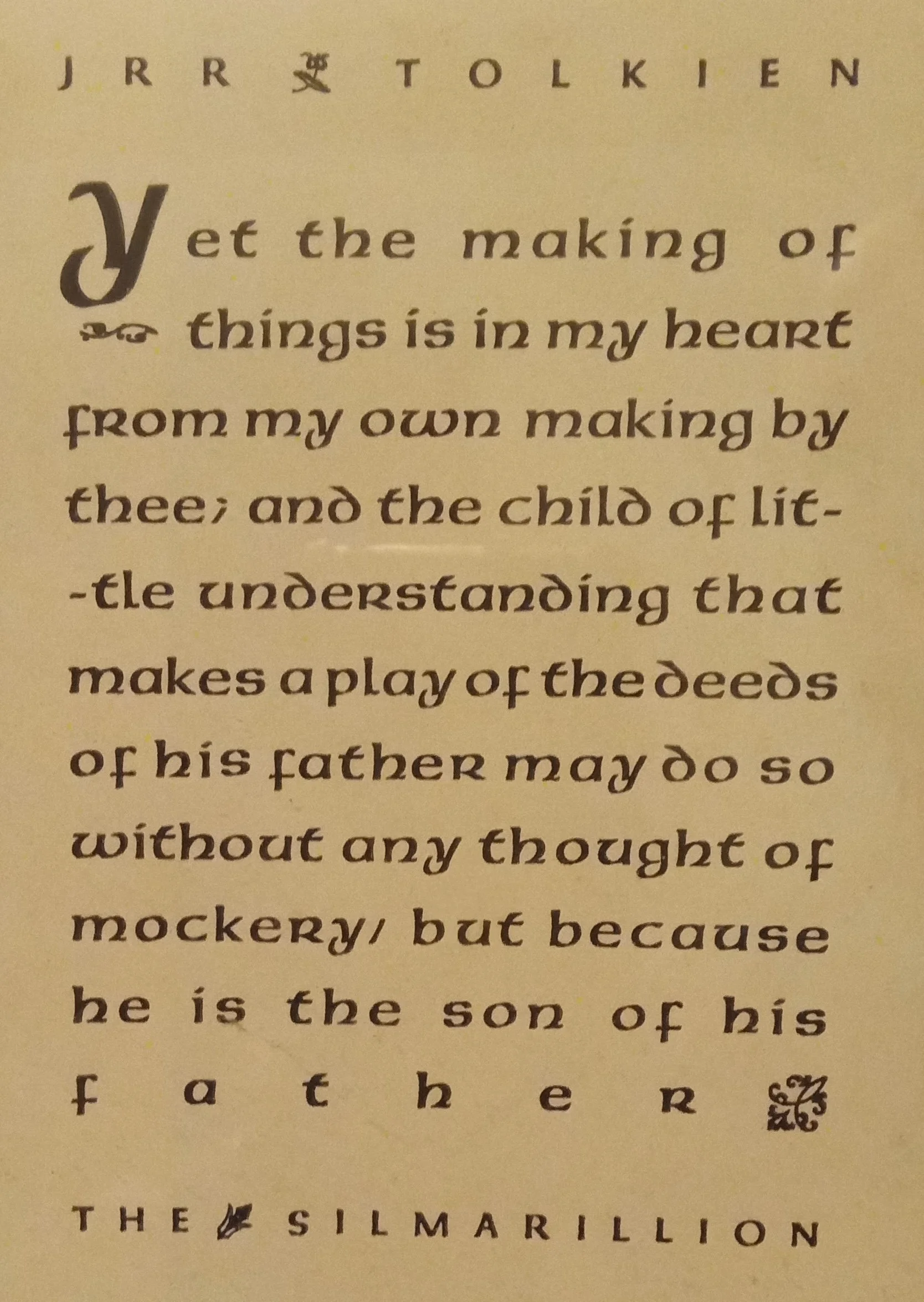
David Vosburg is known for his love of Tolkien on Harvey Mudd College’s campus. This February, Harvey Mudd College alumnus Mark Cyffka '10 visited his old chemistry professor and took a photo next to a gift he had given him many years ago: a quote from The Silmarillion that Mark had made in a hand print press class. Dr. Vosburg has had Mark’s framed prints in his work office and home office for the past 16+ years. What a testament to how good literature has the power to inspire beautiful art and lasting friendships!
Quarterly Highlights
Inspiration: “We are much too much inclined in these days to divide people into permanent categories, forgetting that a category only exists for its special purpose and must be forgotten as soon as that purpose is served.” – Dorothy Sayers, “Are Women Human?”
Resource: The Inklings Variety Hour is a podcast where fans and scholars of the Inklings discuss their work and lives. This past December, host Dr. Christopher Pipkin interviewed Dr. Leslie Baynes (AY23-24 Inklings Project Fellow) on her new book Between Interpretation and Imagination: C. S. Lewis and the Bible (link here).
Event: Westmoot 2026, hosted by the Tolkien Society, will be held May 22-24 in Minneapolis, Minnesota at the Royal Sonesta Minneapolis Downtown. This year’s theme is Hope / Eucatastrophe! The call for papers (due March 1, 2026) and registration are now open (link here).
Interested in supporting the Inklings Project?
The Inklings Project exists because of the generosity of individuals. To make a one-time or recurring donation to the Inklings Project, please visit giving.nd.edu/inklings, or call 574-631-7164.
The University of Notre Dame is a 501(c) (3) tax exempt nonprofit corporation.
For past issues of the Inklings Quarterly, visit www.inklingsproject.org/quarterly.